
Circuit Limits: Why Stocks Sometimes Freeze at Upper or Lower Circuits
Understand how upper and lower circuit limits protect investors and keep stock prices from moving too fast.

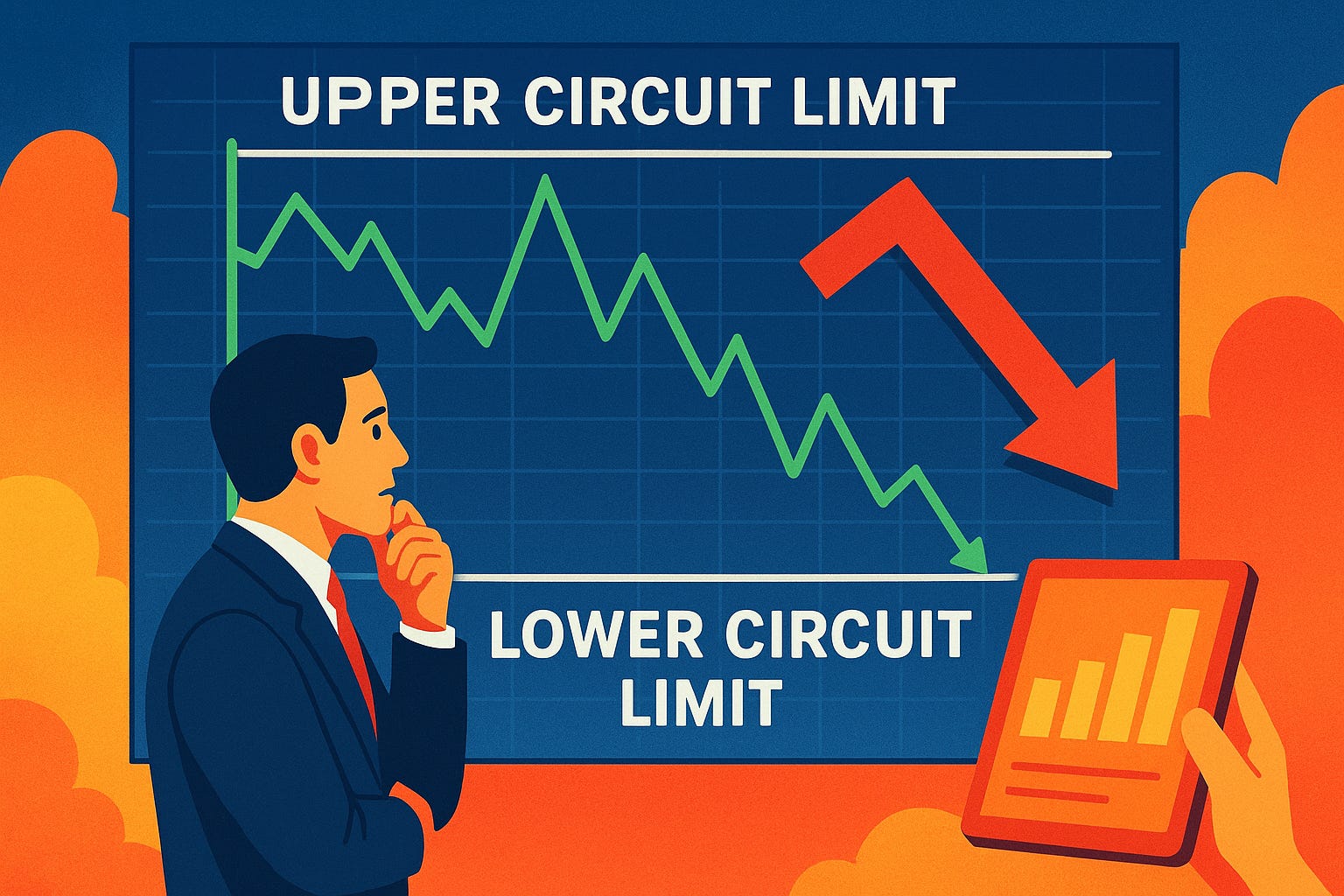
Have you ever seen a stock’s price suddenly stop moving and wondered why? Or maybe you have heard the terms “upper circuit” or “lower circuit” on the news. These are not just fancy market words—they are rules designed to keep trading under control.
What Are Circuit Limits?
Circuit limits are price boundaries set for each stock in a single trading day. They define how high or low a stock can go.
Upper Circuit: The highest price a stock can reach in a day.
Lower Circuit: The lowest price a stock can fall to in a day.
For example, if a stock closed at ₹100 yesterday and has a 10% circuit limit, it can only trade between ₹90 and ₹110 today. Even if buyers or sellers want to go beyond this range, the stock cannot move further than that day.
Why Do Stocks Hit Circuits?
Stocks hit upper or lower circuits when there is a lot of buying or selling pressure. A company may announce great earnings, causing everyone to buy at once, or there may be negative news, causing panic selling.
Circuit limits act like a pause button. They stop the stock from moving too fast and give investors time to think instead of reacting emotionally.
What Happens After a Stock Freezes?
When a stock touches its upper or lower circuit, trading gets frozen because there are only buyers (at upper) or only sellers (at lower).
At this stage, the exchange sometimes steps in and changes the circuit limit. For example, if a stock with a 5% limit hits the circuit, the exchange may widen it to 10% to allow more trading.
But this does not happen for every stock automatically. It depends on:
The stock’s category (F&O stocks, for example, have dynamic limits).
Market regulator (SEBI) guidelines.
The exchange’s decision to ensure fair and orderly trading.
How Circuit Limits Help
Protect Investors: Sudden price jumps or drops can lead to big losses. Circuits slow down extreme moves.
Maintain Fair Prices: When a stock hits a limit, it shows strong demand or supply at that level. Pausing trading helps the market settle.
Keep the Market Stable: Without these limits, rumours or sudden news could create chaos, making trading risky.
The Bottom Line
Circuit limits are a simple but effective tool to keep the stock market orderly. They give investors time to react thoughtfully, prevent panic, and make trading safer. And if the limits are hit, exchanges may adjust them so that buying and selling can continue smoothly.
So next time a stock “hits the upper circuit,” think of it as the market saying, “Hold on, let’s slow down a bit and then move ahead carefully.”