
How Capex Cycles Influence Stock Returns
Discover how Capex cycles impact stock returns and learn to spot growth opportunities early

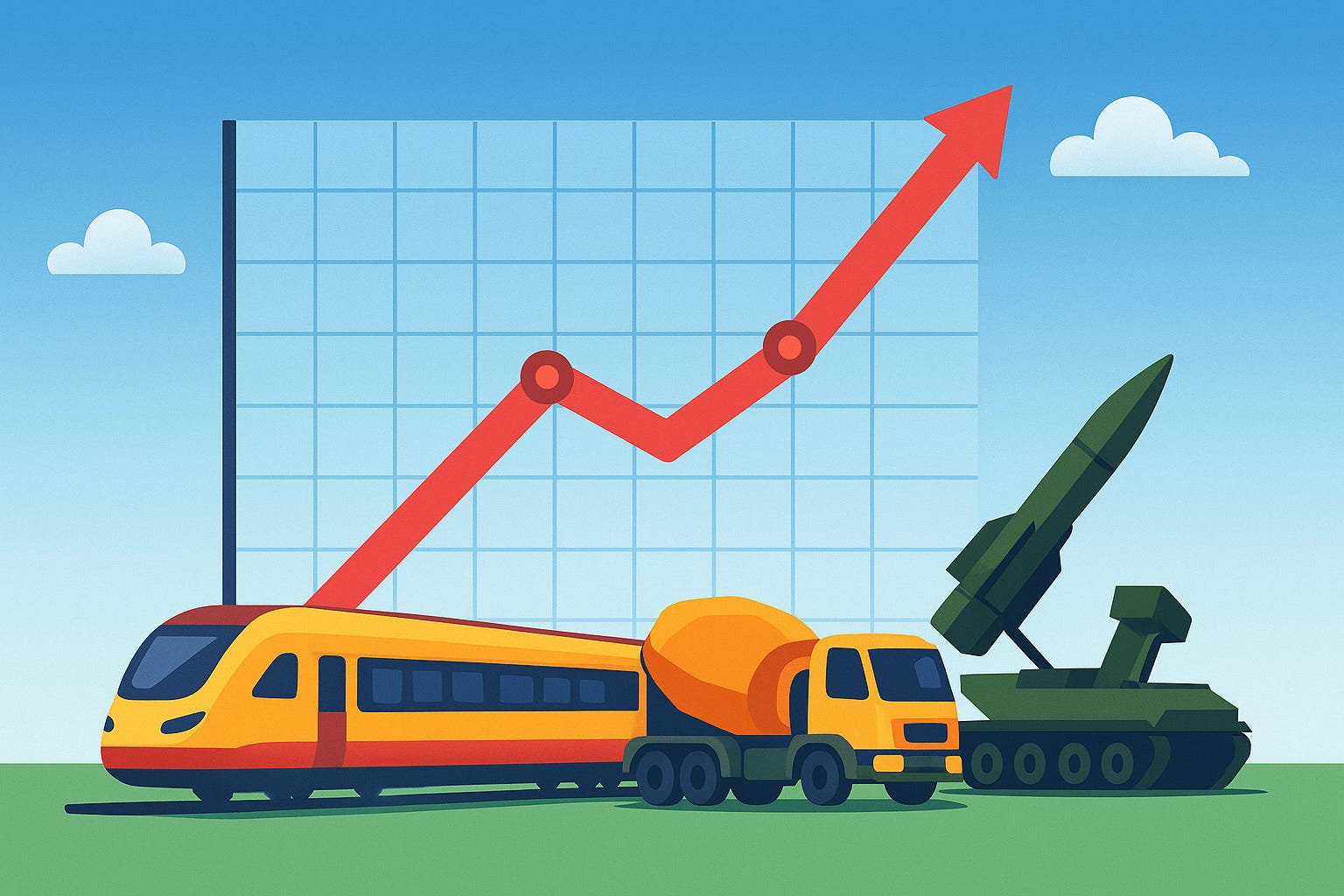
If you follow the stock market, you have probably noticed that some sectors boom when the government announces big projects. Railways, defence, and infrastructure companies are prime examples. A lot of this comes down to capital expenditure, or Capex—the money companies spend to build, upgrade, or expand assets.
Understanding Capex cycles—the periods when companies ramp up spending—can give investors an edge. Let’s see how these cycles play out and how they impact stock returns, using IRCTC, RVNL, and defence PSUs as examples.
What Are Capex Cycles?
A Capex cycle is basically the “investment heartbeat” of a company. When a company starts spending heavily on machinery, infrastructure, or tech, it is often preparing for growth.
In India, government-backed projects heavily influence these cycles. For example, railway expansion or new defence equipment programs trigger Capex activity for companies involved in execution. These cycles typically have three phases:
Announcement Phase: News of new projects or government spending lifts stock prices as investors anticipate future revenue.
Execution Phase: Companies start implementing projects, often facing higher costs initially, but revenue begins to pick up.
Maturity Phase: Projects are completed, revenues stabilise, and stock prices often reflect long-term growth.
Timing matters—a delay in project execution or policy changes can affect expected returns.
Case Studies
IRCTC: Growth Through Rail Travel
IRCTC, which handles catering and tourism for Indian Railways, is not building railways, but it benefits when the rail network expands. More trains and upgraded infrastructure mean more passengers, which drives IRCTC’s business. Over the past five years, the stock has grown steadily, reflecting how even indirect beneficiaries of Capex can profit.
RVNL: Riding the Infrastructure Wave
RVNL executes railway projects, so its fortunes are closely tied to government Capex. For instance, announcements like the 'Vande Bharat' train and modernisation of railway lines often lead to spikes in RVNL’s stock, as investors expect higher project revenues.
Defence PSUs: Betting on Strategic Spending
Companies like Bharat Electronics (BEL) and Hindustan Aeronautics (HAL) get a boost when India invests in defence manufacturing. Initiatives like ‘Atmanirbhar Bharat’ have increased domestic defence spending, benefiting these PSUs. Stock gains depend on project timelines and contract awards, which makes timing and policy awareness crucial.
Takeaway
Capex cycles are more than accounting entries—they are signals for where growth is coming. By watching when companies start spending and tracking government project announcements, investors can spot opportunities before they show up in stock prices.
IRCTC, RVNL, and defence PSUs each show different ways Capex cycles play out: some benefit indirectly, some directly, and all are shaped by government policies. Understanding these cycles can help you make smarter, long-term investment decisions.
It's all high pe sector and
last 4-5 years se growth hai
To base bhi high hai
Abhi konse sector me high capex chal raha hai?
Except last bull cycle sector