
The Secret Behind India’s Infrastructure Growth & How to Invest
A practical guide to understanding India’s construction and infrastructure sector, from growth drivers and challenges to key ratios and top companies.

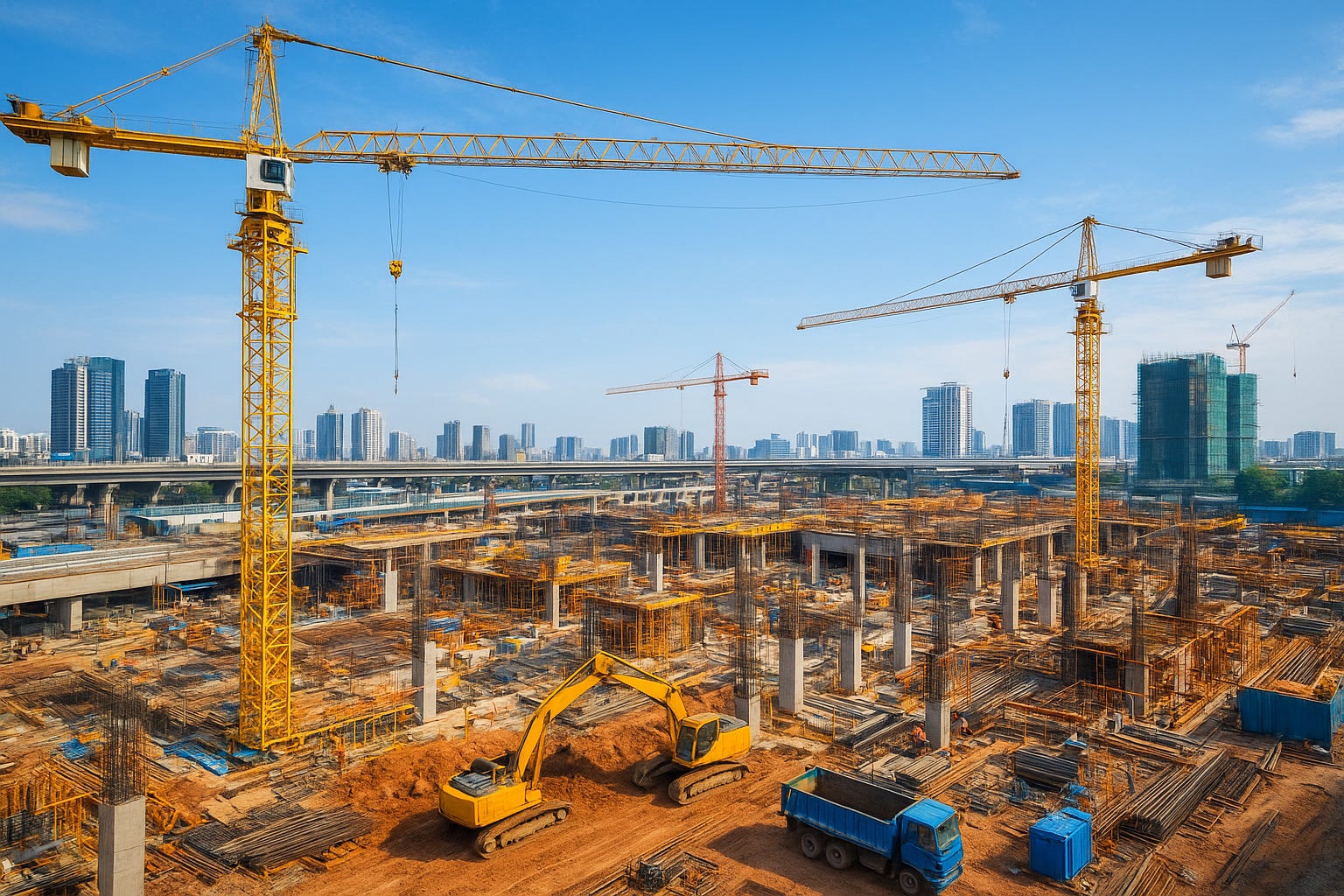
Hello and welcome back to The Finance Lens!
Ever wondered what really keeps India’s economy moving beyond the headlines — the roads we drive on, the metros we ride, and the factories fueling “Make in India”? That’s the world of Infrastructure & Construction — noisy, complex, and surprisingly rewarding if you know how to read it.
In this article, I will walk you through what drives this sector, the challenges it faces, the numbers that matter, and which companies are leading the way. By the end, you will have a practical lens to evaluate this backbone of India’s growth — whether you are investing for the long term or just curious about how India is being built, brick by brick.
So, let’s dive in and see what makes this sector tick.
What We Will Cover Today
In this article, we will walk through everything you need to understand and analyse the Infrastructure & Construction sector step by step:
What the Infrastructure & Construction sector really is and why it matters for India’s economy.
Key growth drivers that are fueling demand and opportunities.
Challenges and risks every investor should know before jumping in.
Important metrics and ratios to watch for healthy vs. warning signs.
Major players leading the sector and their strategies.
Future outlook, including government policies, global trends, and tech disruptions.
Management insights — track record, vision, and alignment with shareholders.
Investor perspective — who should invest, and what risk-reward profile to expect.
By the end, you will have a clear, practical framework to analyse this backbone sector of India’s growth.
Don’t just read once—stay connected. Subscribe for free to get thoughtful insights, fresh ideas, and more stories like this in your inbox.
What exactly is this sector?
At its core, the Infrastructure & Construction sector is about everything that connects India — roads, bridges, railways, airports, ports, power plants, housing projects, and even industrial zones. If manufacturing is the muscle, infrastructure is the skeleton that holds it all up.
Why does it matter so much to India?
This sector is a huge deal for India’s economy. It contributes around 8% to the GDP and provides jobs to over 60 million people. But beyond the numbers, it is the multiplier effect that’s fascinating — every rupee spent on infrastructure creates two or three rupees of economic activity elsewhere.
And the government knows it. The National Infrastructure Pipeline (NIP) plans to pump in over ₹111 lakh crore between 2020 and 2025. That’s not just money on paper — it is roads, metros, smart cities, and digital networks that make life smoother and businesses faster.
What drives this sector forward?
There is no single magic factor — it is a mix of several things working together:
Government spending is the biggest fuel. Projects like Bharatmala, Sagarmala, and Gati Shakti are creating massive opportunities.
Urbanisation is relentless — more people moving into cities means more housing, roads, and metros.
Private investment is slowly coming back through Public-Private Partnerships (PPPs).
Better funding options — institutions like NIIF and IIFCL have made long-term project finance easier.
And globally, as supply chains shift away from China, India’s “Make in India” push is creating fresh demand for factories, warehouses, and industrial infrastructure.
The bumps on the road (challenges)
Of course, no sector this large runs smoothly. Ask anyone who’s managed an infrastructure project — delays are almost part of the plan.
Land acquisition is still the biggest headache. Getting approvals can take months, sometimes years.
Funding and debt are constant worries — delayed government payments often squeeze contractors badly.
Cost overruns are common when raw material prices (like steel or cement) spike.
Execution risk is real. One mistake in project management and margins vanish.
And there’s always the regulatory maze — too many clearances, too little coordination.
Key numbers to watch (ratios & metrics)
Here’s what I personally keep an eye on while analysing infra or EPC companies:
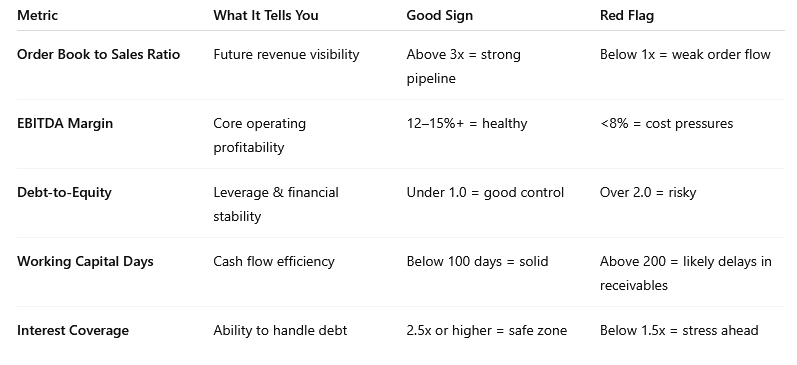
It is not about memorising ratios — it is about reading the story behind the numbers. If debt is rising but order inflows are not, that’s a warning. If margins are improving despite higher input costs, that’s a sign of smart execution.
Who’s leading the game?
A few names dominate this space:
Larsen & Toubro (L&T): The undisputed giant — they build everything from metros to missiles.
NCC Ltd: Known for solid execution and a healthy project pipeline.
IRB Infrastructure: A major player in highways and toll-based BOT projects.
These aren’t “get rich quick” stocks, but they have built India — quite literally — one project at a time.
Where’s the sector heading?
If you look 5–10 years ahead, the story looks exciting.
The Gati Shakti initiative aims to connect all major infrastructure networks — road, rail, air, and ports — under one plan.
Affordable housing remains a big priority.
Green and digital infrastructure are the new buzzwords — think renewable energy, EV charging networks, smart cities.
Indian firms are also expanding overseas, especially in the Middle East and Africa.
Simply put, the demand isn’t going anywhere — if anything, it is just beginning to scale up.
The human side — Management matters
I have learned one thing watching this sector: great management can turn even a tough project into a success story.
When you evaluate a company, check how often they deliver projects on time and whether their balance sheet supports their ambition.
Also, keep an eye on promoter holding and transparency. Infra projects can easily become black boxes of accounting — so clean governance and shareholder alignment matter more here than in most sectors.
Should you invest?
If you are a long-term investor, yes — this sector rewards patience. Projects take years to complete, but when they do, the results can be impressive.
If you are a short-term trader, you might ride the wave during election years or big budget announcements — government push usually drives quick sentiment rallies.
Risks? High debt, policy delays, and execution issues.
Rewards? Stable growth potential and India’s unstoppable infrastructure momentum.
A closing thought
Infrastructure may not sound glamorous, but it is the backbone of India’s growth story. Every new airport or expressway adds a few more bricks to the country’s economic future.
For me, analysing this sector feels like watching India being built — one project, one milestone, one tough deadline at a time.
If you can look beyond the noise and focus on the numbers, management, and long-term demand, this sector has enough potential to quite literally build your portfolio — brick by brick.
Thanks for spending time with The Finance Lens! If this helped, subscribe for free to stay up-to-date with our insights. And if someone in your circle could also benefit from this, share it with them—because investing wisdom grows stronger when it is shared.